Understanding the Benefits of Orthodontic Treatment
Most weeks I see at least one adult who’s been told by their dentist, more than once, that they “should see someone about the bite.” They’ve nodded and put it off for ten years. When they finally come in, it’s usually because something has broken, a crown has popped off or their front teeth have started to look shorter than they used to.
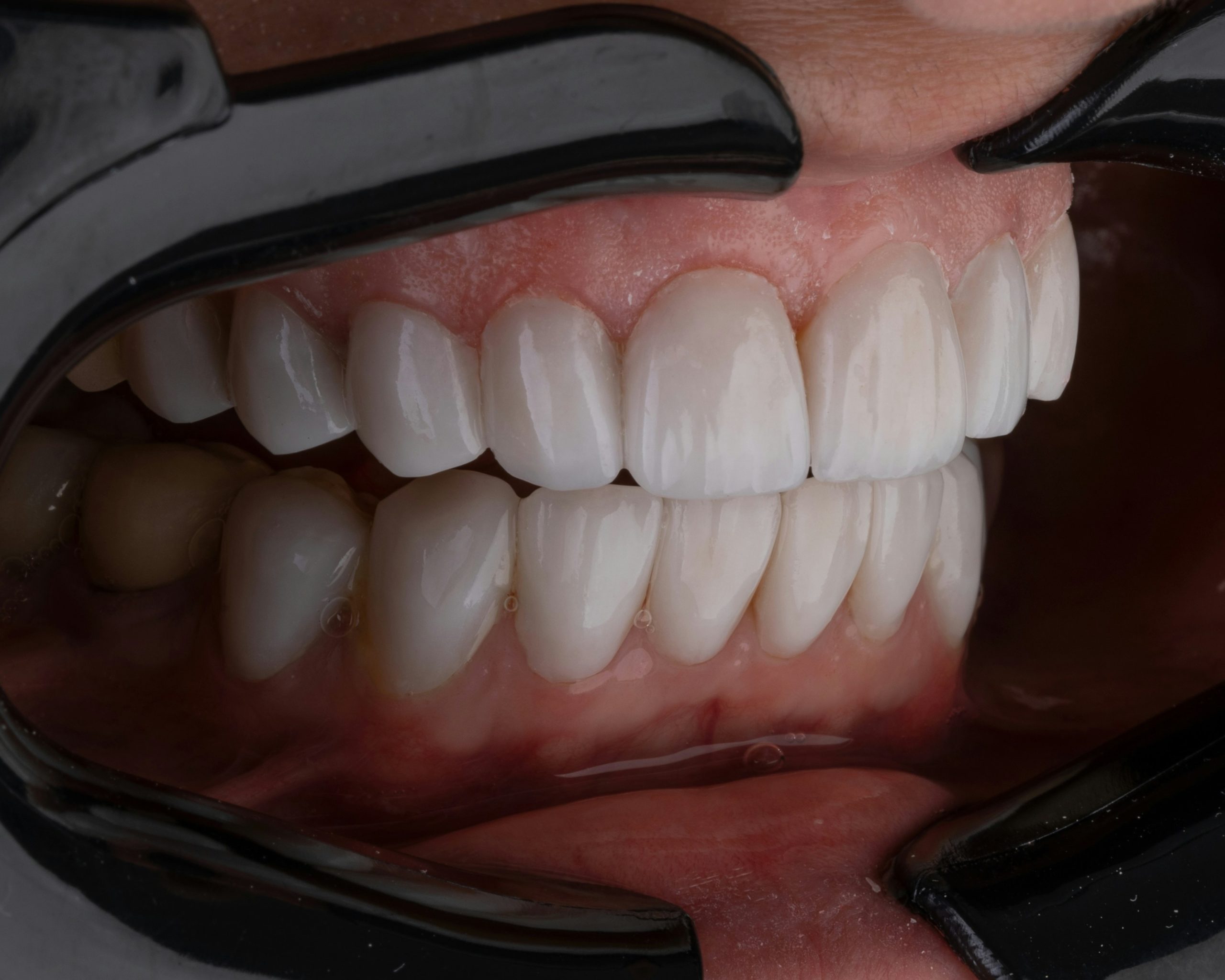
A woman in her forties came in recently with exactly that. Her lower front teeth had worn down by roughly a third. She thought it was her age, or maybe grinding. Some of it was grinding. Most of it was that her top and bottom front teeth met edge to edge, so every time she chewed, they ground against each other like two chisels. Nobody had ever sat her down and shown her that in a mirror.
So this is my version of the benefits of orthodontic treatment. Straight teeth come into it, but I don’t think they’re the main point.
It’s the bite, mostly
Patients come in pointing at a crooked tooth. I’m usually looking at how the teeth meet when they close.
Crowding is the one everyone knows. Teeth overlap because the jaw ran out of room. In the lower front, that tends to trap plaque and tartar, and I see gum problems in those spots all the time. It’s not dramatic. It’s a slow, annoying, lifelong spot that’s hard to get a brush into.
The bites that cause real trouble are less obvious:
- top front teeth sticking well out past the bottoms
- a deep bite, where the uppers cover the lowers so much that the lower teeth chew into the gum behind
- crossbites, where a top tooth sits inside the bottom one instead of outside
- edge-to-edge bites like the one above
Some of these sit there quietly for fifty years and never cause a problem. Others chew through enamel or gum a little bit every day. Part of my job is telling you which one you’ve got. Honestly, sometimes the answer is “leave it.”
Teeth break, teeth wear
Kids with front teeth that stick out snap them. It happens on trampolines, in netball and on the bubbler at school. If your child’s top teeth sit out over their bottom lip, they’re far more likely to come off second best in a knock. I’ve glued plenty of half front teeth back together for twelve-year-olds, and it’s never as good as the original. Bringing those teeth back early lowers the odds a fair bit.
Wear is the adult version, and it’s slower. Enamel doesn’t grow back. Once it’s gone, the conversation turns to bonding, then crowns, and those need replacing every so many years for the rest of your life. Moving teeth a few millimetres so they stop hitting each other wrong is often the cheaper path over twenty years. It doesn’t always feel that way when you’re looking at the quote.
Kids: get them looked at early, but don’t panic
I like to see kids around seven or eight. Most of them don’t need anything at that age, and I send them home with “see you in a year.”
The point is catching the handful of things that are much easier early. A crossbite that’s pushing the lower jaw off to one side can sometimes be sorted with an expander in a few months while the child is still growing. A canine heading off in the wrong direction can be spotted on an X-ray at nine or ten. Sometimes taking out a baby tooth at the right time lets it come through on its own. Leave it and you might be looking at minor surgery and a gold chain to drag it down at fourteen. Parents tend to remember that appointment for all the wrong reasons.
Cleaning, and what I won’t promise
Straight teeth are easier to clean, and that part’s true. I won’t tell you they stop decay. I’ve got patients with lovely straight teeth and a new filling every year, because they sip Coke all afternoon. Orthodontics makes good habits easier to keep up. It doesn’t replace them.
While we’re on it, I’m also cautious when people come in wanting braces to fix jaw clicking, headaches or TMJ pain. Sometimes the bite plays a part. A lot of the time it doesn’t, and the evidence that braces cure jaw pain is thin. If someone’s promising that, ask them to show you why.
The appearance side
I used to be a bit dismissive of the cosmetic stuff. I’m not anymore.
I’ve had a teenage boy who’d been doing a closed-mouth half-smile in photos for so long that his mum didn’t have a single picture of his teeth from age eleven onwards. Plenty of adults hold a hand over their mouth when they laugh and don’t realise they do it. When treatment finishes, they mostly don’t say much about their teeth. They just stop covering them. I don’t think anyone needs a medical excuse to want that.
Braces or aligners
I get asked this in nearly every adult consult.
Clear aligners are genuinely good now. For mild to moderate crowding or spacing in an adult who’ll actually wear them, they work well. They come out to eat, they’re easier to keep clean and nobody at work notices.
You do have to wear them twenty to twenty-two hours a day, though. I can tell within about two minutes at a review who’s been leaving them in the car. The teeth just haven’t moved the way the plan said they would.
Fixed braces are still better for big bite corrections, badly rotated teeth, and most teenagers. That’s not a dig at teenagers. Braces work while you’re asleep, at school and at a mate’s eighteenth, without anyone having to remember anything.
Mail-order aligners are another story. There’s no X-ray, nobody checking your gums or roots, and nobody looking at your bite before teeth start moving. I’ve been asked to fix a few. It cost those people more than doing it properly the first time would have.
Retainers aren’t optional
This is the part people don’t want to hear. Teeth want to go back to where they were, and they keep trying for life, not just for a year or two.
Most of my patients finish with a thin wire glued behind the front teeth and a clear retainer for night-time. Wear the night one for as long as you want your teeth to stay straight. That’s the honest answer, and it’s the same answer for everyone.
A good chunk of my adult patients had braces at fourteen and lost the retainer at uni. They’re back in their thirties, paying for it again. Don’t be one of them.
When it’s worth it, and when it isn’t
Full treatment in Australia often lands somewhere between $6,000 and $10,000, depending on how complicated your case is and where you live. Your extras cover might chip in a bit, usually with a waiting period and a lifetime limit that runs out faster than people expect. Most practices offer payment plans.
I’d say treatment is worth doing if your bite is wearing or breaking teeth, if a kid’s front teeth are sticking out and they play sport, or if there’s an impacted tooth to deal with while they’re still growing. It’s also worth it if your teeth bother you every day and you can afford it without stress.
If it’s a tooth that’s slightly turned and you only notice it in photos, I’d probably leave it. Same if you know you won’t wear retainers, or if the money would put real pressure on the household. I’d rather send you home than sell you something you’ll regret. A decent clinician will tell you the same.
A few things people get wrong
“I’m too old.” I’ve moved teeth for people in their sixties. As long as the gums and bone are healthy, age isn’t the issue. If there’s active gum disease, we get that settled with your dentist first.
“I need a referral.” You don’t. You can book straight in with a specialist orthodontist. A specialist has done three years of full-time training after dentistry. Some general dentists do aligners well too. Just ask what training they’ve done and how many cases like yours they’ve treated.
“It’s only cosmetic.” Sometimes it is. Sometimes your dentist has been fixing the same chipped tooth every year, and nobody’s asked why.
Start with a look
A first assessment is usually cheap or free. You’ll walk out knowing what your bite is doing and what happens if you leave it alone. Sometimes the answer is “nothing much, see you in a few years.” That’s still worth knowing.
The woman with the worn lower teeth is about halfway through treatment now. Her dentist will build the edges back up once her bite’s out of the way. If it had been done fifteen years ago, she wouldn’t have needed that.