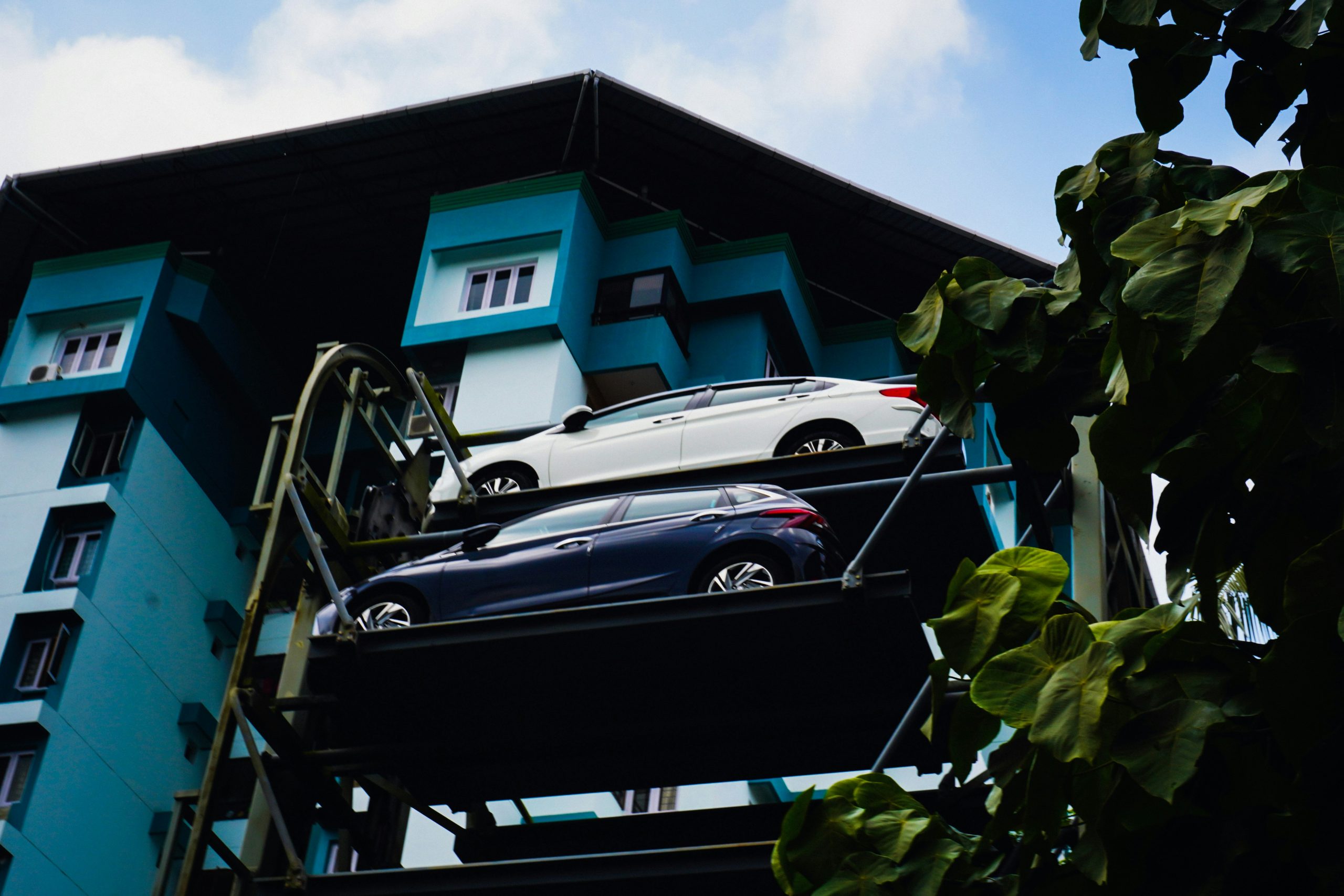
Finding space for another car isn’t always as simple as extending a driveway or adding another parking bay. On compact residential blocks, busy commercial sites and high-density developments, there may be little or no room to expand outwards.
A car stacker offers another approach. By using the vertical space above an existing parking area, it can substantially increase capacity without requiring the same footprint as conventional side-by-side bays. However, the right time to consider a stacker depends on the site, its users and the type of system required.
When you need more parking but can’t expand
One of the clearest reasons to install a car stacker is a shortage of usable land.
This commonly occurs in apartment developments, townhouses, commercial buildings and established properties where boundaries, existing structures or neighbouring sites restrict expansion. Instead of allocating more valuable floor area to parking, a stacker allows vehicles to be stored vertically.
For developers, that space efficiency may also support a better overall site layout. Land that would otherwise be needed for parking could potentially be used for residences, commercial areas, storage, landscaping or shared amenities.
When parking requirements affect project feasibility
Parking can have a major influence on whether a development is practical and financially viable. Excavating a larger basement, building another parking level or substantially redesigning a site can add considerable cost and complexity.
A car stacker may help provide the required number of spaces within a more compact area. The potential benefits are greatest when the system is considered during the early design stage, while the project team can still coordinate ceiling heights, structural requirements, pits, drainage, electrical services and vehicle access.
Leaving the decision until construction is well advanced can limit the available options. If parking capacity is likely to be a challenge, it’s worth investigating car stackers before the plans are finalised.
When an existing property needs additional capacity
Car stackers aren’t limited to new developments. Some systems can be retrofitted into suitable existing buildings.
The OMER BiPark supplied by HLS Equipment is a dependent double car stacker that doesn’t require a pit. It can accommodate two vehicles within approximately the footprint of one conventional bay, provided the site has appropriate headroom, access and structural conditions.
HLS also offers the OMER TriPark, a dependent triple stacker designed to park several vehicles in a limited area without requiring a pit.
These systems may suit private garages, vehicle collections, dealerships or parking areas where users can coordinate vehicle movements. Because they’re dependent systems, lower vehicles must be moved before an upper vehicle can be retrieved.
When independent access is important
A dependent stacker can work well when the vehicles belong to the same household or business. It may be less suitable when parking spaces are allocated to unrelated residents who need access at different times.
In that situation, an independent stacker may be the better choice. An independent system uses a pit to enable access to vehicles on different levels without first moving another vehicle.
The OMER Double Spacer can accommodate up to four cars in the space of two traditional parking bays while maintaining access to every vehicle. This can make it particularly useful in apartment buildings and shared residential garages.
Because an independent system requires a pit, it’s generally easier and more cost-effective to incorporate it early in a new development than to retrofit it later.
When vehicle security or storage matters
Car stackers can also provide a practical storage solution for prestige, classic or collector vehicles. Raising a vehicle above ground level can help separate it from everyday garage activity while allowing another vehicle to use the space below.
The suitability of a system will depend on the weight, dimensions and ground clearance of the vehicles involved. Modern stackers can accommodate a broad range of vehicles, but the specifications shouldn’t be assumed. SUVs, 4WDs, sports cars and vehicles with accessories may all have different requirements.
Before selecting a system, consider the vehicles using it today as well as those that may use it in the future.
When the site can support safe, practical operation
A car stacker needs more than an empty bay. The site must have suitable headroom, structural capacity and safe access. Depending on the system, it may also require a pit, drainage, electrical services and specific clearances around the equipment.
It’s equally important to consider how people will use the stacker each day. Who needs access? How frequently will vehicles move? Will drivers be comfortable following the operating procedure? Is there enough room to enter and exit safely?
The best system is one that suits both the physical site and the routines of its users.
The earlier you ask, the more options you’ll have
You should consider installing a car stacker when conventional parking can’t provide the capacity you need, when additional excavation or construction would be impractical, or when vertical vehicle storage offers a smarter use of the available space.
Early expert input can help you understand what’s possible before design decisions become difficult or expensive to change.
HLS Equipment provides impartial product advice, technical planning, installation and ongoing support for car stacker projects across Australia. If you’re considering a new development or need more parking at an existing property, contact HLS Equipment to discuss a solution designed around your site.